
Session Border Controller (SBC)
Secure voice traffic across carrier boundaries
Controls session admission and protects SIP trunks between your UC platforms, contact centers and external carrier networks in real time.
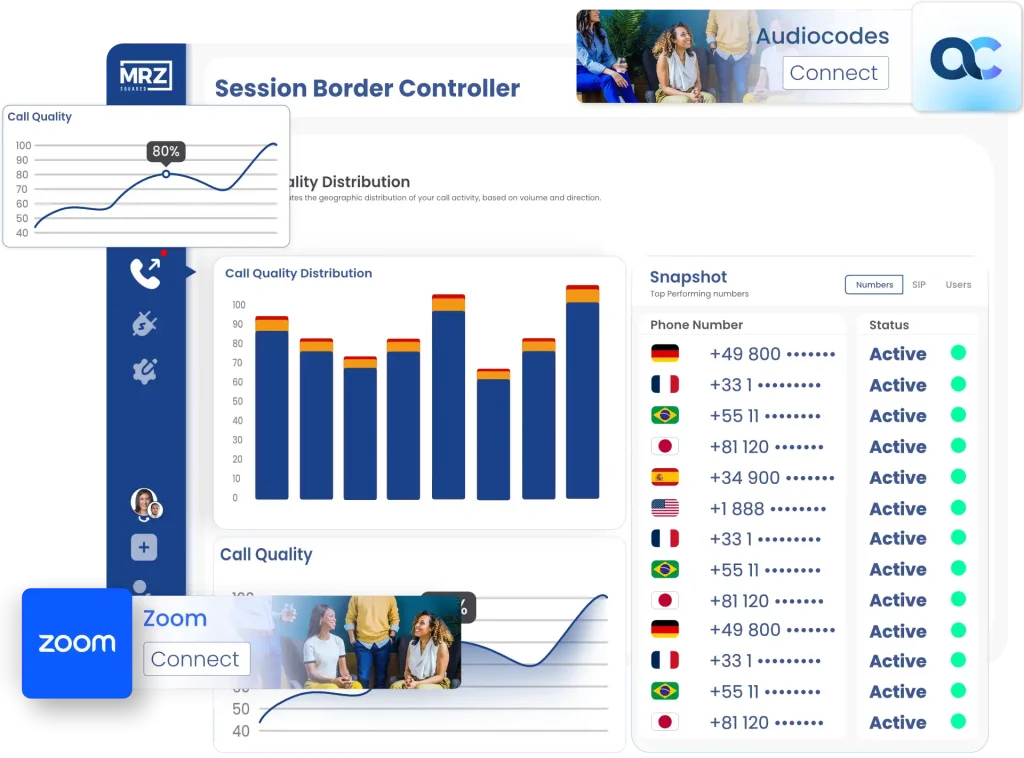
DDoS attacks dominate VoIP threats
Most SBC deployments lack automated traffic filtering for abnormal signaling spikes during peak business hours.
Toll fraud drains telecom budgets annually
Existing solutions fail to restrict international call routing by extension or time-based policies effectively.
Remote endpoints create security gaps
SBCs struggle with NAT traversal and encrypted media handling for distributed Teams and Zoom deployments.
A challenging context
Voice networks fail without perimeter-level control
When enterprises lack a dedicated session controller at network borders, they expose voice infrastructure to DDoS floods, toll fraud, and protocol mismatches that disrupt call flows and create unplanned expenses across distributed locations.
Why does Session Border Controller (SBC) matter now?
Cloud migration demands carrier-grade protection
As North American enterprises move unified communications to UCaaS platforms, they need SBC infrastructure that secures Direct Routing connections, prevents fraud during coexistence phases, and maintains call quality across hybrid environments.
UCaaS adoption accelerating in 2025
Microsoft Teams deployments require certified SBCs to terminate PSTN calls and enforce enterprise routing policies.
Regulatory compliance gets stricter
FCC mandates stronger VoIP security frameworks to combat robocalls and prevent unauthorized international traffic.
Cyber-attacks targeting SIP ports
In Q1 2025, network-layer DDoS attacks surged 509% year-over-year, overwhelming unprotected voice infrastructure.
Multi-vendor environments expand
Contact centers integrate Genesys, Five9 and legacy PBXs simultaneously, requiring interoperability management.

Assess current voice architecture
Map existing SIP trunks, PBX connections, UC platforms, and remote endpoints to identify security vulnerabilities.
Configure session admission policies
Define call routing rules, bandwidth limits, codec preferences, and geographic restrictions for each trunk.
Establish high-availability pairing
Deploy active-standby configurations with automatic failover to maintain voice continuity during outages or attacks.
Monitor traffic with real-time alerts
Track call quality metrics, detect anomalies, and receive automated notifications for fraud attempts or failures.
Provide 24/7 technical assistance
Access engineering support for firmware updates, configuration changes, and troubleshooting without service windows.
Reduce fraud losses by 87% annually
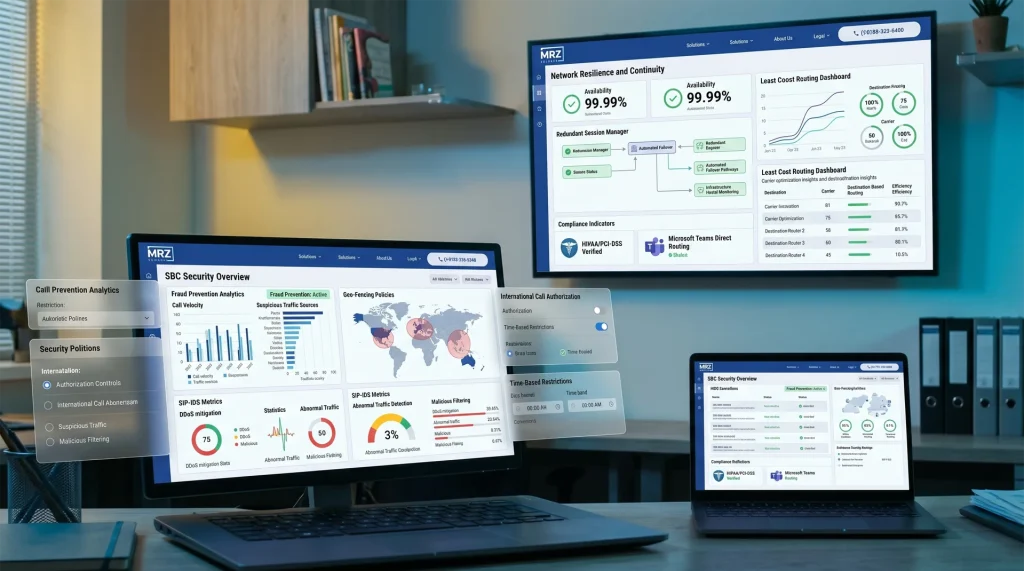
Time-based restrictions and geo-fencing prevent unauthorized international calls outside business hours automatically.
Block DDoS floods before impact occurs
Pattern recognition identifies abnormal SIP INVITE rates and drops malicious traffic without affecting legitimate calls.
Maintain 99.99% voice availability rate
Redundant session managers with health monitoring ensure continuous operation during equipment or network failures.
Cut carrier costs through smart routing
Least-cost routing algorithms select optimal trunks per destination, reducing monthly telecommunications expenses 40%.
Encrypt media to meet HIPAA standards
SRTP and TLS protocols secure voice data in transit for healthcare, finance, and regulated industry compliance needs.
Accelerate Teams migration by 6 months
Pre-certified Direct Routing configurations eliminate integration delays and allow gradual PBX decommissioning phases.
Features
Complete visibility for continuity and risk control
Adapted to different scenarios
Does your infrastructure match these patterns?
Organizations with multi-site operations, contact center platforms, or cloud UC deployments face specific voice security and interoperability challenges. Three operational characteristics typically signal immediate SBC requirements.
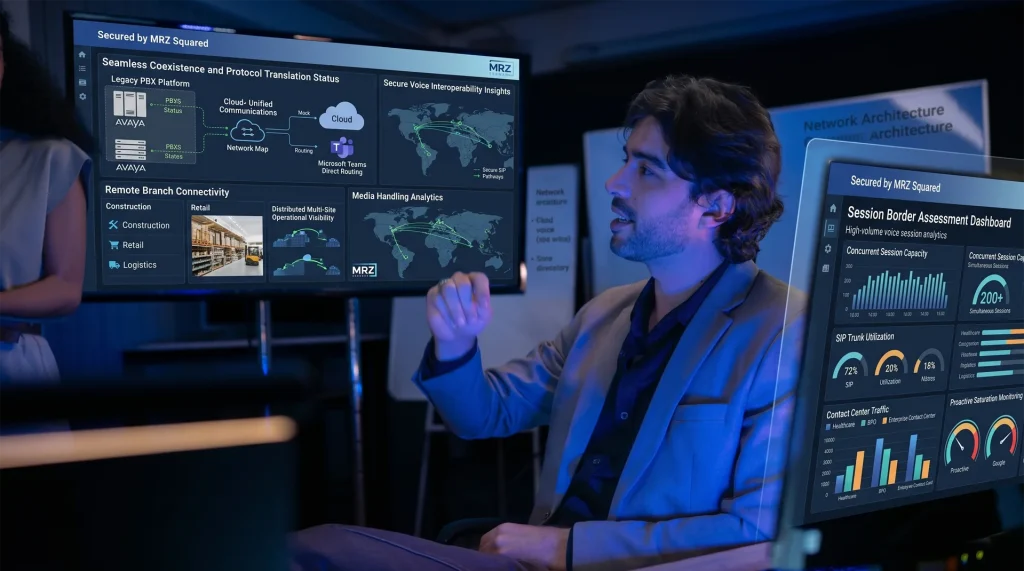
Managing 200+ concurrent voice sessions
Contact centers, BPOs, and healthcare providers need session capacity management to prevent trunk saturation issues
Operating hybrid PBX and cloud systems
Coexistence between legacy Avaya installations and Microsoft Teams requires protocol translation and media handling
Supporting remote or distributed offices
Construction, retail, and logistics operations with branch locations need secure SIP connectivity over public networks
Why MRZ
Proven carrier-grade delivery
MRZ2 designs SBC implementations around operational reliability standards developed through North American telecommunications deployments. Our configurations prioritize uptime, fraud prevention, and seamless integration with your existing platforms.
Certified for all major UC platforms
Direct integration credentials for Microsoft Teams, Zoom Phone, Webex Calling, and Genesys eliminate compatibility risks.
Zero-downtime migration methodology
Parallel operation techniques allow gradual cutover from legacy systems without service interruptions or call drops.
Proactive monitoring prevents outages
24/7 NOC surveillance detects degradation patterns before users experience quality issues or security breaches.
Deployment completed within 30 days
Standardized configuration templates and pre-staging procedures reduce implementation time compared to industry averages.
Protect voice communications before the next security incident occurs
With DDoS attacks increasing 509%, delaying SBC deployment creates measurable risk exposure every day your network borders remain unprotected.
