
Voice-to-Cloud Migration
Migrate voice systems to cloud without downtime
Transfer on-premise PBX infrastructure to cloud platforms
while maintaining call quality, protecting data and reducing TCO by 50%.
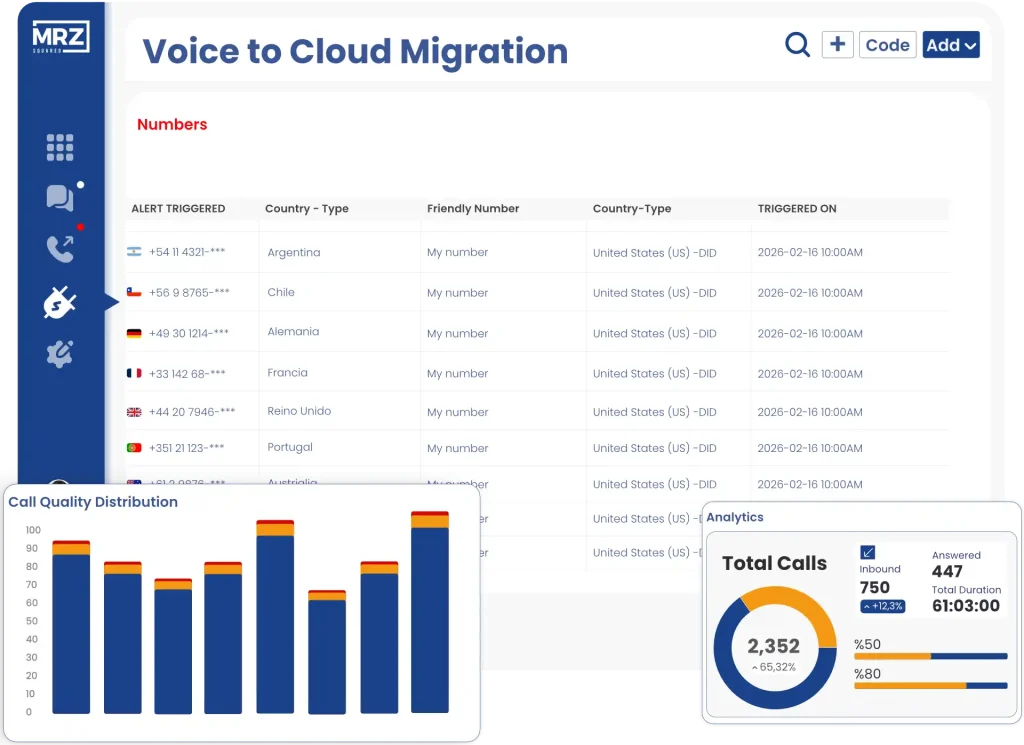
Hybrid integration breaks during setup
On-premise and cloud systems clash during migration, causing 3–6-month delays and 45% of project failures.
Unplanned outages disrupt customer calls
Poor planning creates service gaps. Calls drop mid- conversation, damaging trust and costing loses per minute.
Hardware costs drain it budgets yearly
Maintaining aging PBX equipment requires constant licensing, parts replacement, and specialized technicians.
A challenging context
On-Premise systems fail when businesses need agility
Legacy PBX hardware locks companies into maintenance contracts averaging $12,000 annually per site, prevents remote workforce support, and creates single points of failure. When systems crash, recovery takes 24-72 hours while revenue stops.
Why does Voice-to-Cloud Migration matter now
Cloud voice adoption jumped 52% among enterprises
Cloud telephony reached $23.9B in 2024 and will hit $47.8B by 2033. Over 60% of VoIP users now prefer cloud-hosted PBX. Companies migrating today gain first-mover advantages in cost structure, workforce flexibility, and AI integration.
PSTN Shutdown deadlines approach fast
Carriers are decommissioning copper networks worldwide. Businesses face forced migrations with tight timelines.
Remote work requires distributed systems
52% of IT environments have already migrated to cloud. Hybrid teams need phone access from anywhere, not desk- only.
AI Analytics demand cloud-native voice
Sentiment analysis, call scoring, and real-time coaching require cloud processing. On-premise can’t compete.
Compliance mandates audit-ready logs
HIPAA, PCI-DSS, and SOC 2 require encrypted voice storage with retention controls only clouds reliably provide.
Infrastructure assessment & mapping
Audit current PBX, SIP trunks, phone numbers, and call flows. Document dependencies and integration points.
SBC Deployment with redundancy built
Install AudioCodes Session Border Controllers across public/private cloud. Configure geographic failover paths.
Phased user migration with zero cutover
Move departments incrementally during off-peak hours. Run parallel systems until validation confirms stability.
Real-Time monitoring & optimization
Deploy dashboards tracking MOS scores, latency, jitter. Adjust QoS policies based on traffic patterns observed.
24/7 Support with proactive alerting
Managed services team monitors thresholds. Incidents trigger automated escalation before users report problems.
Uptime with geographic failover
Multi-region SBC clusters eliminate single points of failure. Automatic rerouting keeps calls connected always.
Reduction in telecom spend year 1
Eliminate PBX maintenance, reduce trunk costs, remove hardware refresh cycles. Predictable per-user pricing.
Instant capacity scaling without cables
Add 100 users in 48 hours. Seasonal spikes require clicks, not conduit. Scale down just as fast after peaks.
End-to-End encryption meets compliance
TLS/SRTP protects every call. Audit logs prove HIPAA, PCI-DSS adherence. Certificates managed automatically.
Sub-50ms latency across data centers
Advanced QoS and intelligent routing deliver MOS scores above 4.2. Calls sound clearer than legacy landlines.
Call analytics drive 30% support gains
Real-time transcription, sentiment tracking, agent coaching. Turn voice data into operational intelligence.
Features
Infrastructure that delivers measurable ROI in days

Adapted to different scenarios
Is Voice-to-Cloud Migration right for your business?
Not every organization needs immediate migration. Companies managing 100+ users across multiple sites, operating contact centers, or facing PSTN sunset deadlines gain the most. Three indicators signal readiness for transition.
Multiple locations with aging PBX gear
Managing 3+ sites with hardware over 7 years old. Maintenance contracts exceed $15,000 annually per location
Remote teams need consistent reliability
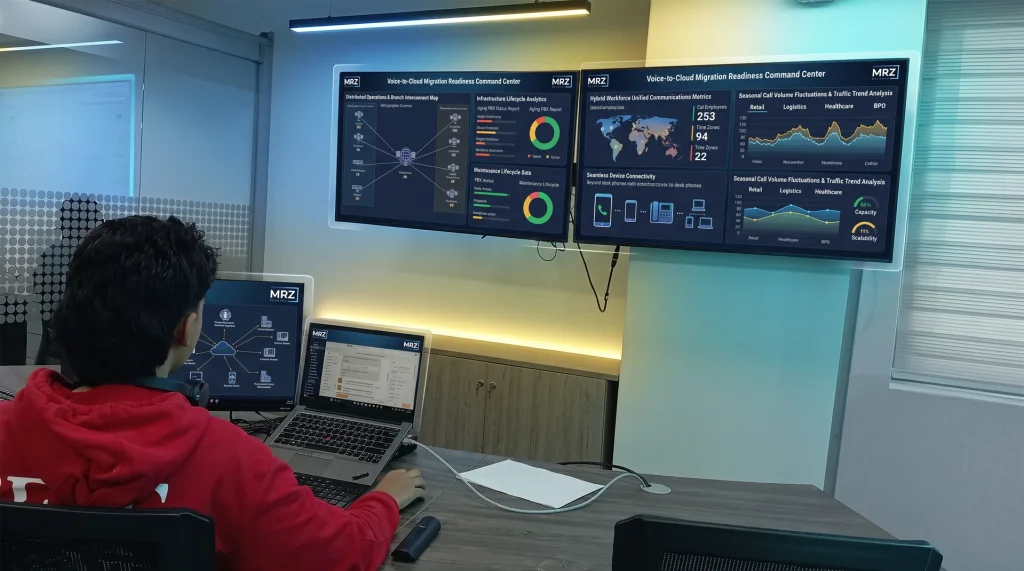
Hybrid workforce spans time zones. Employees require full phone features on mobile devices, not desk phones only
Call volume fluctuates with seasonality
Retail, logistics, healthcare, BPO sectors experience 40%+ traffic swings. Fixed capacity wastes budget
Why MRZ
The MRZ2 advantage: expertise, security, agility
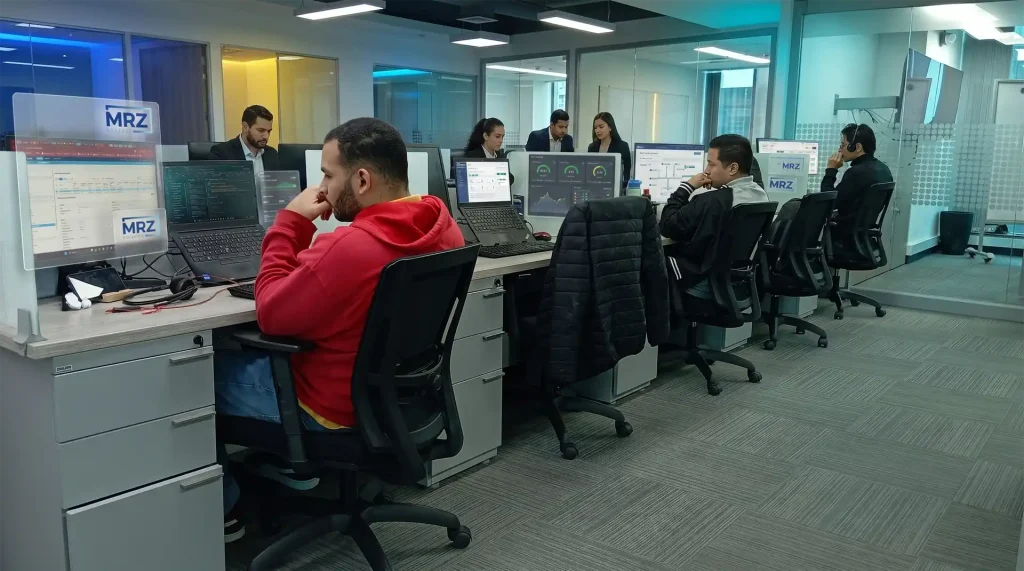
MRZ2 delivers Voice-to-Cloud Migration backed by deployments across 11 industries. Our team monitors infrastructure 24/7 from Miami, ensuring enterprise-grade uptime globally.
Carrier-grade SBC technology included
AudioCodes partnership provides enterprise SBCs at MSP pricing. Competitors charge $30K+ for equivalent hardware.
Zero-downtime methodology proven in 50+ migrations
Phased rollout keeps existing systems live. Rollback
procedures tested before go-live dates.
Unified multi-platform compatibility
Connect Teams, Zoom, Genesys, Avaya, 3CX simultaneously. Avoid vendor lock-in while standardizing management.
Analytics dashboards for IT leaders
Real-time metrics on call quality, trunk utilization, user adoption. Export reports for executives monthly.
Make your voice infrastructure operate in the cloud
Cloud telephony market reached $23.9B in 2024, growing 8% annually. Over 180 million VoIP endpoints now operate in North American corporate networks. Enterprises migrating today join 52% of IT environments already cloud-based, capturing immediate savings on hardware, maintenance, and trunk costs.
