Voice Management Suite
As-a-service management, monitoring, and continuous optimization of voice infrastructure to ensure availability, quality, and end-to-end operational control.

Quality & Performance
Technical control of voice quality and operational performance with direct impact on the customer experience
Quality & Performance is the capability within Voice Management Suite designed to sustain consistent voice quality and operational control in environments where service continuity is non-negotiable. It delivers real-time visibility, actionable metrics, and tools to anticipate degradations, prioritize incidents by impact, and execute corrections with full traceability.
Built for operations evolving toward cloud and hybrid integrations, it helps standardize management, maintain interoperability across platforms and providers, and adapt capacity and performance to changes in traffic or business demand. The result is a more stable, governable voice operation aligned with scalability, security, and efficiency objectives.
Continuous visibility into real call experience
This capability enables monitoring call quality from both a technical and operational perspective, analyzing metrics such as latency, jitter, packet loss, and perceived quality. Its focus is to turn Quality of Experience (QoE) into a measurable and manageable signal, so control does not rely solely on delayed complaints or subjective perceptions.
What problem does it solve?
Limited visibility into the actual quality of the customer experience delivered.
Difficulty determining whether issues stem from the network, provider, or setup.
Reliance on complaints or delayed reporting to identify service incidents early.
How does it help?
Provides real-time and post-call monitoring across the complete service journey.
Enables early detection of degradations before they affect the end-user journey.
Supports root cause analysis with objective data for efficient escalation paths.
Operational benefit
Reduces undetected disruptions, accelerates incident resolution, and protects the end customer experience with verifiable technical evidence.
Centralized analysis of call behavior and traffic
Unified Call Analytics consolidates call, session, and voice flow data into a single analytics plane, eliminating silos across platforms, providers, and infrastructure layers. It enables a consistent operational view to understand trends, detect anomalies, and correlate technical events with real impact on service.
What problem does it solve?
Fragmented information across multiple platforms, systems, and providers.
Limited KPI visibility to accurately evaluate performance and key trends.
Difficulty correlating technical events with broader operational effects.
How does it help?
Consolidates metrics for volume, duration, routing, and service delivery.
Identifies recurring anomalies and behavioral patterns across operations.
Provides reliable insights that support technical and business decisions.
Operational benefit
Improves planning, optimizes resources, and enables decisions based on real data, reducing uncertainty around capacity, performance, and continuity.
Dynamic codec adaptation to preserve quality and efficiency
Transcoding enables audio codec adaptation based on network conditions, interoperability requirements, or operational needs, maintaining stability across hybrid and multivendor environments. Its purpose is to reduce technical friction between platforms and sustain quality even when the network or endpoints do not operate under the same standards.
What problem does it solve?
Platform incompatibilities across voice systems and multivendor setups.
Quality degradation caused by variable and unstable network conditions.
Inefficient bandwidth usage that limits efficiency and increases costs.
How does it help?
Provides controlled, automatic transcoding across various voice codecs.
Optimizes call quality without requiring manual tuning or intervention.
Supports hybrid deployments across diverse multivendor voice solutions.
Operational benefit
Maintains stable quality, reduces interoperability failures, and optimizes network resource usage, decreasing incidents and escalations related to compatibility.
Capacity scalability aligned with actual demand
On-Demand Capacity enables dynamic adjustment of voice infrastructure capacity to handle traffic spikes, campaigns, contingencies, or operational growth. The goal is to maintain continuity and quality without permanently overprovisioning, aligning resources with real consumption and service criticality.
What problem does it solve?
Costly overprovisioning or limited capacity during critical demand peaks.
Traditional provisioning models lack agility for evolving traffic levels.
Risk of congestion during campaigns, contingencies, or high-volume peaks.
How does it help?
Enables flexible capacity scaling aligned with operational traffic needs.
Aligns actual consumption with resources allocated to each service layer.
Supports operational continuity without unnecessary infrastructure spend.
Operational benefit
Reduces costs, prevents disruptions, and supports business growth without friction, protecting the customer experience during periods of peak demand.
Quality & Performance
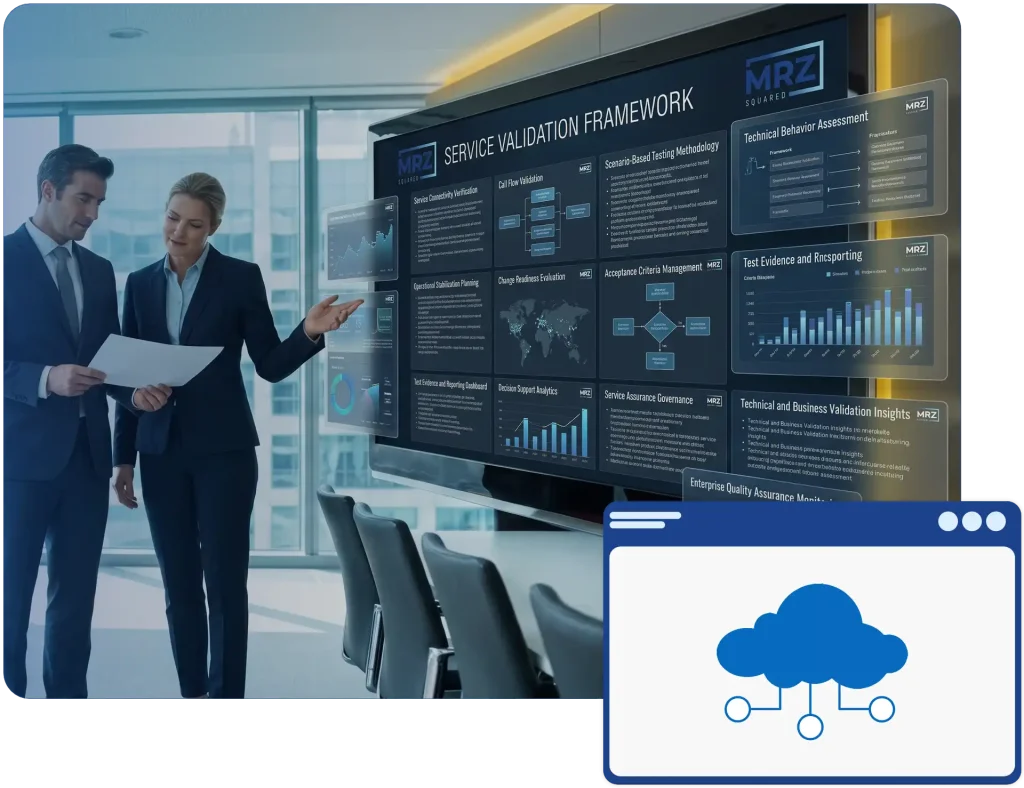
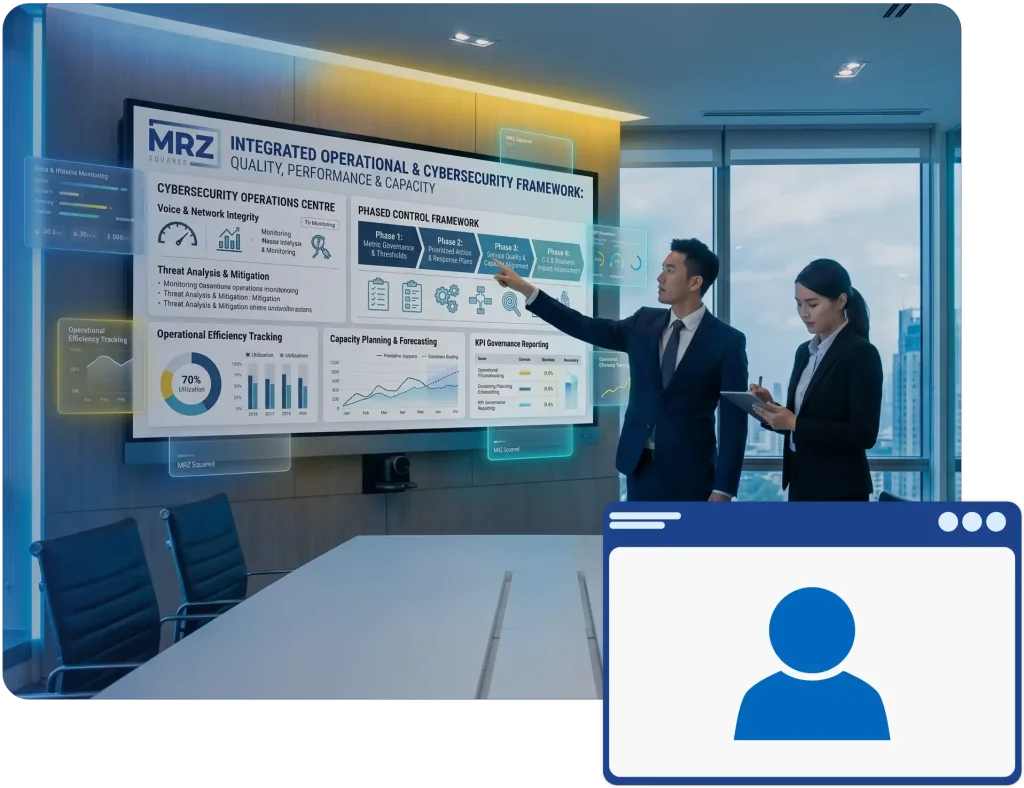
If you need to align voice quality, operational performance, and capacity with customer experience objectives, you can define a phased control framework with metrics, thresholds, and action plans prioritized by impact.
SIP Security & Protection
Operational security for signaling and media, focused on continuity and risk control
SIP Security & Protection brings together protection and hardening capabilities tailored to voice over IP environments where the exposure surface includes SIP signaling, media, RTP, and SRTP, third party interconnections, and multisite operations. Its purpose is to reduce operational and business risk without compromising interoperability, performance, or incident response effectiveness.
This capability enables teams to detect and contain malicious activity, minimize architecture exposure, protect the confidentiality of voice traffic, and record sessions when the use case requires evidence, auditability, or compliance. The result is a more consistent security posture with verifiable technical controls and traceability across critical events.

Active detection and containment of SIP and VoIP threats
Enables teams to identify anomalous behavior and common threats in voice environments, including fraud, scanning, registration attempts, flooding, route abuse, and more, and to apply mitigation measures to contain impact before it affects operations or the user experience.
What problem does it solve?
Security incidents are detected late, after affecting availability and cost control.
Traffic exposure increases fraud risk, abuse potential, and misuse of key resources.
Difficulty separating legitimate traffic from abnormal activity across environments.
How does it help?
Monitors and detects suspicious patterns across signaling flows and active sessions.
Mitigates threats through policy-based actions, including blocking and rate capping.
Provides evidence-based visibility for technical analysis and escalation procedures.
Operational benefit
Reduces the risk of unavailability, protects critical resources, and minimizes financial impact from fraud or abuse, with a faster and more controlled response.
Reduction of Architecture and Endpoint Exposure
Hides voice network topology, addressing, and internal structure details from interconnections and third parties, reducing the information available for reconnaissance, exploitation, or targeted attacks.
What problem does it solve?
Exposure of internal components such as IPs, domains, routes, and versions.
Greater risk of scanning, enumeration, and targeted attacks from exposure.
Complexity in securing hybrid and multivendor environments consistently.
How does it help?
Normalizes and masks sensitive signaling headers and message elements.
Segments internal and external domains to reduce overall attack surface.
Protects operations without disrupting flows or planned interoperability.
Operational benefit
Reduces the risk of targeted attacks and supports a consistent security posture across third party and provider interconnections.
Protection of Confidentiality for Signaling and Media
Ensures communication confidentiality through signaling and or media encryption, reducing exposure to interception and strengthening security controls across internal and external links, and interconnections.
What problem does it solve?
Risk of interception or capture of voice traffic during active transit.
Security and compliance require verifiable cryptographic safeguards now.
Difficulty standardizing encryption across platforms and trust domains.
How does it help?
Policy-driven encryption for signaling and media across trusted domains.
Consistent rule enforcement by domain, connection type, or criticality.
Technical basis for auditing and validating confidentiality safeguards.
Operational benefit
Reduces exposure to interception and strengthens the security posture without sacrificing continuity or operational control.
Session Recording for Compliance, Auditability, and Operational Evidence
Enables SIP session recording when traceability, evidence, or control is required, whether driven by compliance obligations, internal audit needs, or operational requirements, including incident investigation, disputes, or post event analysis.
What problem does it solve?
Lack of reliable evidence for audits, investigations, and verification.
Difficulty reconstructing sessions after incidents, disputes, or claims.
Need for control in mission-critical operations and validation scenarios.
How does it help?
Structured session recording aligned with defined operational criteria.
Supports audits and technical review workflows with clear traceability.
Integrates with information governance and policy retention frameworks.
Operational benefit
Improves audit readiness and incident response, reducing ambiguity and strengthening control and compliance.
SIP Security & Protection
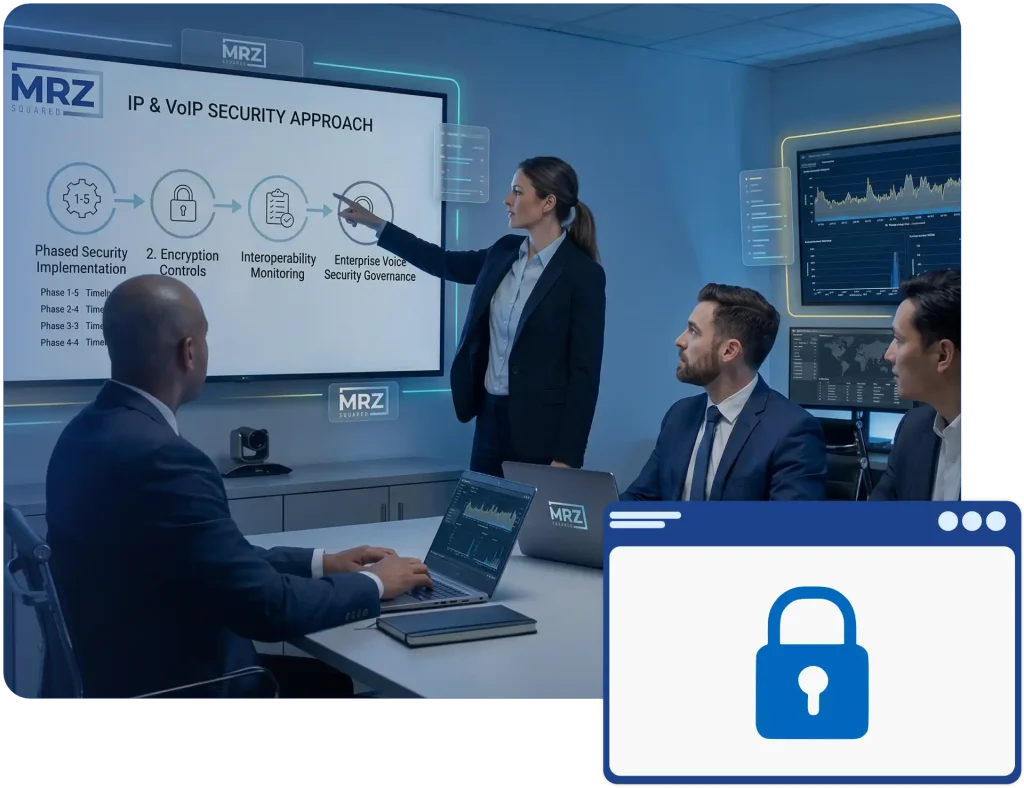
If you need to strengthen SIP and VoIP security without compromising interoperability or service continuity, you can define a phased approach covering exposure reduction, encryption controls, mitigation policies, and traceability, aligned with your architecture and operational criticality.

Operations & Service Continuity
Operational continuity and change control for uninterrupted voice services
Operations & Service Continuity brings together the elements that sustain day to day voice operations in mission critical environments and reduce the impact of changes, transitions, and network events. Its purpose is to keep the service stable, with verifiable operational control, less friction across teams, and more predictable recovery times when failures or degradations occur.
In distributed and hybrid operations, this layer strengthens continuity through standardized practices, traceability, and recovery criteria aligned with service criticality. The result is a more governable operation for IT teams, with less exposure to recurring incidents and a more consistent end user experience.
Operational pillars
Cross functional controls for continuity, resilience, and operational response
These services are operated under cross functional controls focused on continuity and risk reduction
High Availability and Resilience
Fault tolerance and continuity by design across critical components and routes
Failover and Disaster Recovery
Switching and recovery based on operational criteria and periodic validation
Change and Configuration Management
Change control and traceability with rollback when applicable
Incident Response and Postmortem Workflow
Response runbooks, evidence based escalation, and continuous improvement to reduce recurrence
Standardized provisioning with traceability and configuration control
This service structures provisioning and operational management of voice infrastructure to reduce variability, accelerate activations, and maintain consistency across sites, providers, or hybrid environments. It relies on traceability and configuration control to reduce incidents caused by non standardized changes.
What problem does it solve?
Slow or manual activations that are hard to scale without increasing risk.
Inconsistent configurations across devices, sites, and operating domains.
Limited traceability to audit changes and correct deviations efficiently.
How does it help?
Standardized workflows for provisioning and recurring operational updates.
Traceability for key activations and changes with validation and rollback.
Reduced repetitive intervention and fewer human errors across operations.
Operational benefit
Accelerates deployments, reduces configuration related incidents, and strengthens technical governance across operations.
Local activation before the firewall for frictionless deployments
This service enables local provisioning to be prepared and executed before the firewall layer, minimizing policy related blocks, long approval cycles, and site to site differences. It includes pre deployment validations that reduce production failures and improve the ability to isolate root causes during incidents.
What problem does it solve?
Delays from firewall rules, port openings, and key cross-team dependencies.
Intermittent failures from security policies misaligned with voice traffic.
Slow diagnosis due to limited prevalidation and unclear root issue origin.
How does it help?
Local preparation with technical criteria to reduce network-side friction.
Prevalidation reduces failures before exposing the service to live traffic.
Faster cause isolation across network, security, and configuration layers.
Operational benefit
Reduces time to go live and improves time to diagnosis when the network impacts the service.
Resilient routing with alternate paths to sustain service
Reduces unavailability and sustains service continuity across changes in network conditions, traffic, or providers.
What problem does it solve?
Disruptions from unstable routes, congestion, or single-path dependencies.
Loss of continuity during migrations, provider changes, or network events.
Limited visibility into service impact from active routing decisions made.
How does it help?
Routing policies aligned with service criticality and network conditions.
Alternate routes and switching rules sustain continuity under degradation.
Traceability of routing decisions to validate stability and tune behavior.
Operational benefit
Maintains stable quality, reduces interoperability failures, and optimizes network resource usage, decreasing incidents and escalations related to compatibility.
Change windows, validation, and post migration stabilization for continuity
This service governs service transitions and planned migrations with a focus on continuity. It defines windows, validation criteria, and stabilization procedures to reduce disruption risk and accelerate the return to normal operations after high impact changes.
What problem does it solve?
High unavailability risk during migrations, platform changes, and cutovers.
Incomplete validation allows critical issues to reach production systems.
Slow stabilization due to missing procedures and post-change verification.
How does it help?
Operational planning sets change windows and acceptance criteria up front.
Transition runbooks include verification steps and post-change controls.
Operational evidence supports fast correction of deviations and lower MTTR.
Operational benefit
Reduces risk during critical changes and accelerates post change stabilization while maintaining service continuity.
Operations & Service Continuity
If your voice operations require measurable continuity and risk control during changes and transitions, we can review critical dependencies and continuity criteria to define a phased plan aligned with service criticality.

Service Testing & Validation
Verifiable testing to ensure connectivity, flows, and stability before and during operations
Service Testing & Validation consolidates the operational tests that confirm, with technical evidence, that voice services are connecting correctly, that flows work as designed, and that audio and signaling behave consistently. Its goal is to reduce avoidable failures, accelerate activations, and lower risk during changes, migrations, or expansions.
In hybrid environments with multiple dependencies, including network, security, platforms, and third parties, this approach provides clear acceptance criteria and measurable results. The result is less uncertainty in production, faster diagnosis, and decisions grounded in testing rather than assumptions.

Operational DID validation to confirm they connect and behave as expected
Number Testing verifies that your DIDs complete calls correctly and maintain stable behavior in real operational scenarios. It does not just test a number. It confirms end to end connectivity, response, expected routing, and technical evidence to isolate causes when intermittent issues occur.
What problem does it solve?
DIDs appear active but fail during call setup, routing, or response checks.
Intermittent incidents surface only after end users report service issues.
Escalations take longer due to limited evidence of where service degrades.
How does it help?
Inbound and outbound testing verify setup, response, and expected behavior.
Operational verification confirms service connectivity before critical use.
Technical evidence supports diagnosis with network, security, or providers.
Operational benefit
Reduces service connectivity incidents, accelerates activations, and improves resolution time for recurring failures.
IVR flow validation to ensure the user journey works without friction
IVR Testing validates that IVR flows run end to end, including menus, options, timeouts, retries, transfers, and outbound routes. It ensures the logical flow design is correctly reflected in production and that the user experience is not disrupted by configuration, audio, or signaling issues.
What problem does it solve?
Flows misroute, hang, or transfer incorrectly under real-world conditions.
Inconsistent experiences result from missed timeouts, retries, or checks.
Difficulty validating changes without affecting active end-user traffic.
How does it help?
Scenario-based testing validates menus, transfers, and fallback call paths.
Verifies critical flow points, including no response and return to menu.
Post-change evidence confirms stability and helps avoid recurring failures.
Operational benefit
Protects the end customer experience, reduces post change rework, and improves the reliability of the customer service channel.
End to end testing of the call journey to ensure operational continuity
Call Flow Testing validates the complete call path from origin to the expected destination, including routing decisions, transfers, and operational control points. It is a comprehensive test to confirm the call travels as designed, even when there are platform changes, route changes, or operational rules in place.
What problem does it solve?
Calls connect but reach wrong destinations or degrade along service paths.
Failures arise from routing, transfer logic, time rules, or integrations.
Limited ability to reproduce scenarios and isolate exact failure points.
How does it help?
Validates the call journey across expected flows and edge-case scenarios.
Confirms routing decisions and transfer points with verifiable evidence.
Supports go-live approvals and changes using defined acceptance criteria.
Operational benefit
Reduces post deployment failures, accelerates stabilization after changes, and improves continuity in mission critical operations.
Technical confirmation of signaling and audio for rapid diagnosis and stable operations
SIP and RTP Validation verifies the technical consistency of signaling, SIP, and audio, RTP, to ensure calls not only establish sessions but also maintain two way audio, correct negotiation, and stable behavior. Its value is to provide clear technical evidence to isolate causes and accelerate remediation.
What problem does it solve?
One-way audio, no audio, or quality loss that is difficult to isolate.
Signaling incompatibilities appear as timeouts or inconsistent behavior.
Slow diagnosis due to poor traceability across network and service layers.
How does it help?
Verifies session setup and signaling consistency across service flows.
Validates two-way audio and confirms expected media behavior end to end.
Provides evidence to speed diagnosis and support technical escalation.
Operational benefit
Improves mean time to diagnose and resolve, reduces recurrence, and stabilizes operations with verifiable criteria.
Service Testing & Validation
If you need to validate service connectivity, flows, and technical behavior before a change or to stabilize operations, we can define a scenario based test plan with acceptance criteria and evidence to support technical and business decisions.